What it is
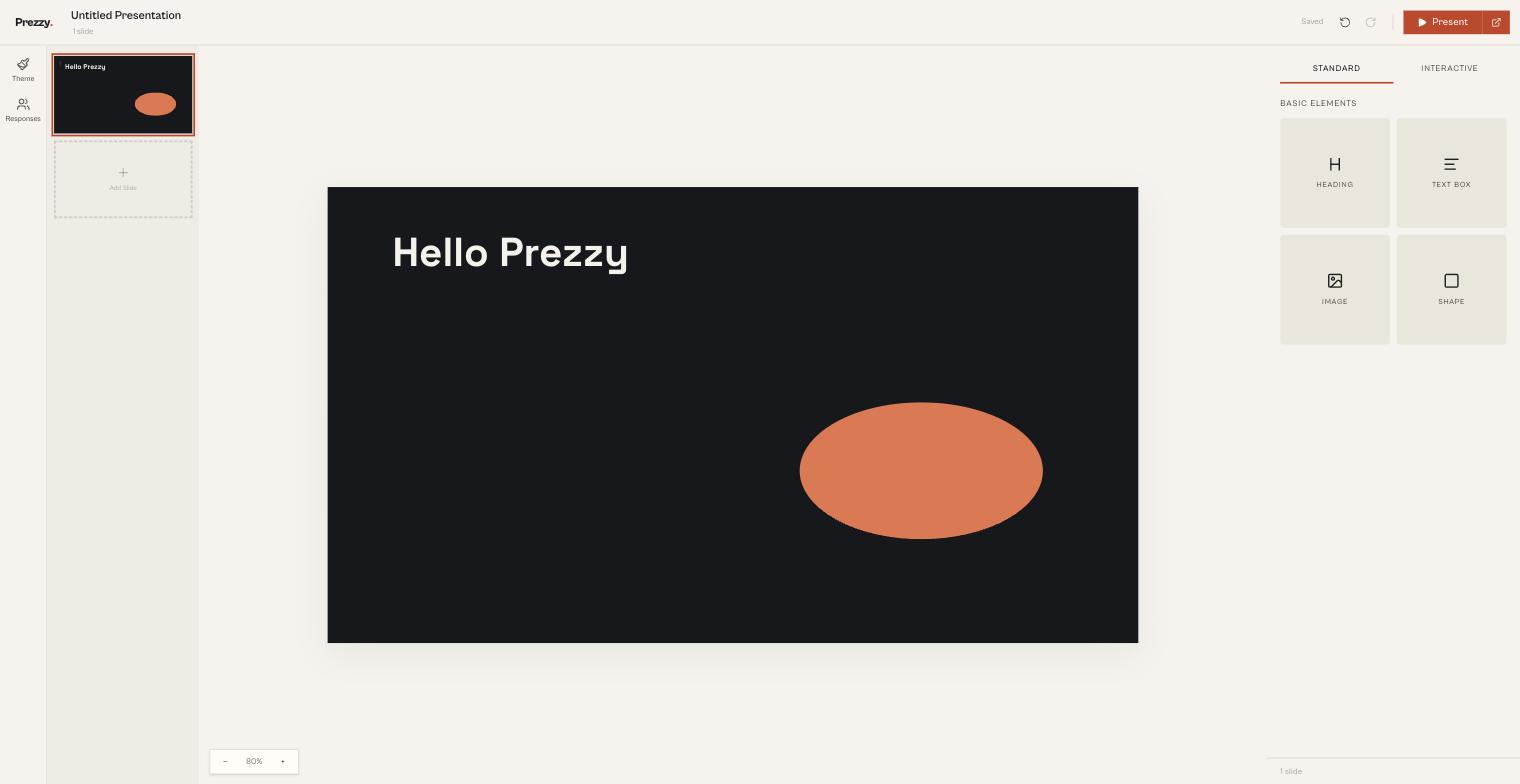
Prezzy is a web app for interactive presentations. You build slides on a canvas with drag and drop, using text, images, shapes and layout presets. During the talk the audience scans a QR code and answers quizzes and word clouds right from their phones. No account, no app. Open the browser, enter the code, join in.
Several people can work on the same deck at once and see each other's cursors, selections and current slide. That sounds like a feature you bolt on at the end. In Prezzy it is the foundation the whole editor stands on.
The editor doesn't talk REST
The most interesting decision in the project: the editor doesn't talk to a single REST endpoint. Every presentation is a Yjs document. Slides, elements, title and theme live together in one CRDT that the browser edits locally. Every interaction shows up instantly, and undo and redo come almost for free with the Y.UndoManager.
For every open document the server keeps an authoritative copy in memory and syncs it with all connected editors over socket.io, using the standard sync messages from y-protocols. The CRDT resolves conflicts between people editing at the same time on its own. Cursors, selections and the active slide travel along on the same connection through the awareness protocol.
The document is stored as an update blob. On top of that, the server writes it back, slightly delayed, into plain database rows: one table for slides, one for elements. Presenter mode, audience views and the dashboard only read those rows over simple REST and know nothing about the CRDT. Real time where it's needed, boring tables everywhere else.
A core without React
The core of the editor is plain TypeScript without a single line of React: the document schema, the commands, a state machine for interactions and a selection store, each with its own unit tests. React hooks in through a thin layer using useSyncExternalStore.
That pays off in testing. The actual editor logic runs in tests without a browser, the API is checked with integration tests against a real Postgres, and Playwright covers the click paths. Three levels, each testing what it does best.
Showtime
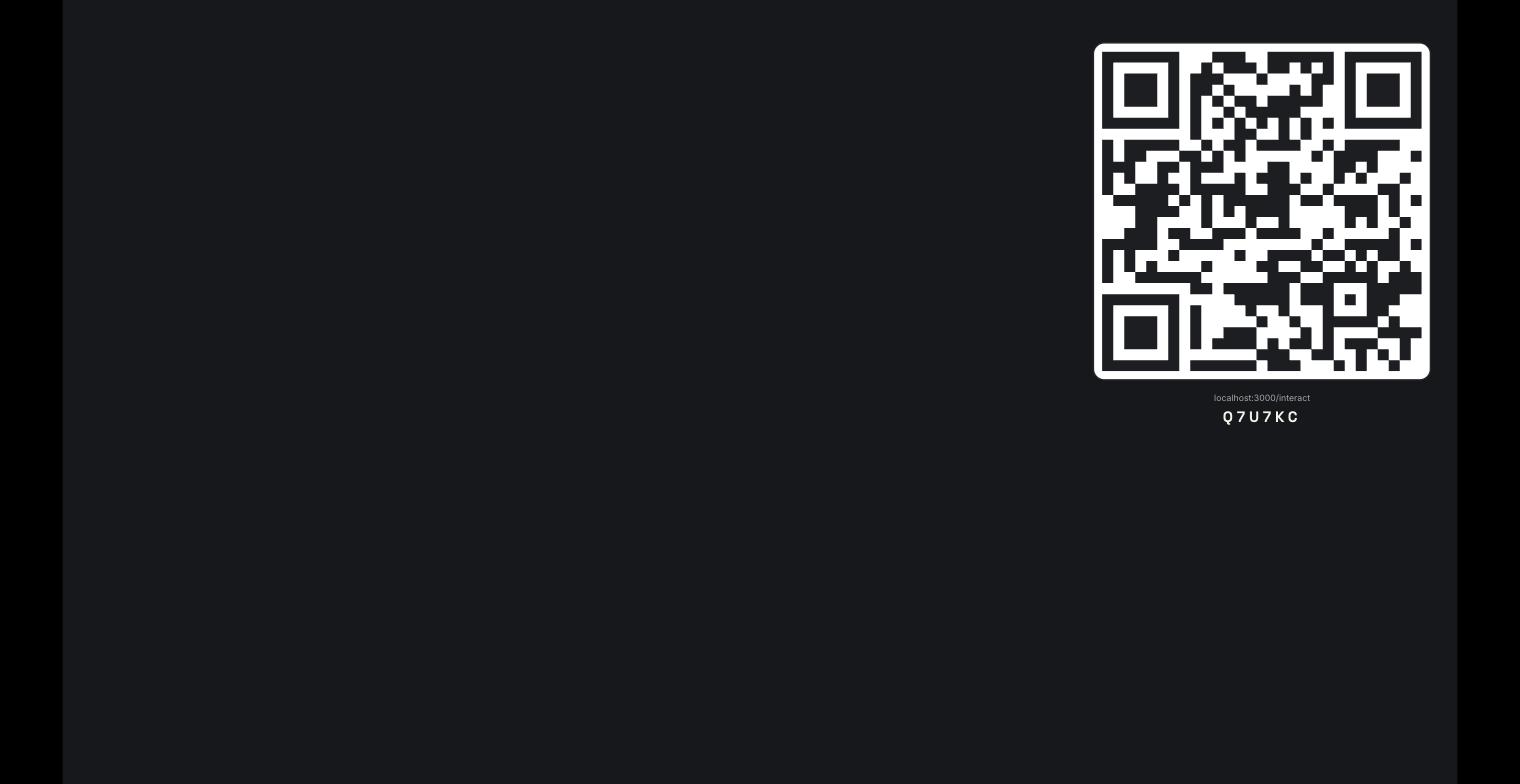
In presenter mode the slides run full screen, while a live counter shows how many answers are coming in. Quizzes have timers, points and a leaderboard. Word clouds grow in real time from the audience's answers, word by word, while people are still typing.
To make that work without anyone installing anything, joining is completely anonymous through a join code. Phone out, scan the QR code, answer. The barrier has to be that low, otherwise nobody in a full room joins in.
The stack
- React
- TanStack Router
- TanStack Query
- Tailwind
- NestJS
- Drizzle
- Postgres
- Yjs
- socket.io
- Turborepo
- Playwright